Wednesday, 12 December 2012

Multi-cam Memoirs

Multi-cam memoirs.
My first experience with the multi-cam project started last year when i was a contestant on a lot of the second years shows, I then went on to host a show. I had a lot of fun doing this and it got me excited for the next year when a group and I would be creating our own shows.
When it was time to pick groups i was straight in there to pluck my friends out from the crowd to create my own college themed “Avengers”. I was certain we were going to excel in this. With the driving creativity of the combined minds of Tim and myself mixed with the working force of Andrew and Kyle peppered with the good looks of Claudia and Georgie, I thought we’d be unstoppable.

The first idea we agreed upon was a chat show about 'Paranormal activity', we called it 'Paranormal Investigators'. Now at first Tim and I were against the idea and proposed a 'comedy' show primarily based on 'The Ricky Gervais show' where each episode Tim and I would interview some one we thought was a little odd and try and get a few laughs.  I say 'comedy' loosely, as it was only Tim and myself who thought it was funny. So we worked on this 'comedy' for a while, while the rest of the group suffered silently, two weeks before the show was meant to be filmed, we scrapped the idea and went back to the paranormal one.

'Paranormal Investigators' was a chat show with two guests and a VT. The VT was our group going out to a local haunted spot and doing some filming at night, hoping to run into a ghoul or at least Mr. Jenkins the janitor dressed as the swamp thing. Unfortunately we're not Mystery inc. so we didn't run into any denizens of the night. We staged a couple jumps to make it more interesting to watch, for example there's a bit in the VT where Tim's leaning against a fence talking and someone slams their hand against it to make him jump, but we weren't trying to make people think Zuul was chasing us, we made it obvious it was for a laugh and to make the video less boring. The first guest we had on the show was a psychic woman who claimed to be able to communicate with the dead, do palm readings and exorcisms. She was very interesting and had some good stories. We planned to have some sort of scientist as the second guest to create a debate on the show but as we left everything last minuet we didn't have a scientist, we had a boy. The boys name was Matt and he was a camera guy for our VT, he did a good job but he's no Noam Chomsky. Perhaps this will be a lesson to us for our next show.

For this show we decided that the loud and cocky guy should be the floor manager, as that's the job who talks to the audience, guests and keeps the floor in check. That guy happens to be me. "I got this in the bag" I thought, as I lay back sipping on a cocktail of arrogance and certainty. Claudia, bless her, was put as the director, and part of what entails with that job is to make sure everyone is on track, now I'm quite a handful at times so i fully appreciate why everyone became quickly aggravated with me, but she kept her cool, and kicking and screaming, she pulled the group through on the day of the shoot. I don't think i did a terrible job at floor managing, but i know i didn't do a great job either, I wasn't as attentive to the guests as i should have been and i wasn't as fun as i planned to be, when the time came to talk about health and safety with the audience, looking back it must have seemed like i couldn't wait to get out of there, not the case, i think i was just nervous. Perhaps next show i'll do a different job.

The next show was in about 5 weeks and like a group of professional matadors we were going to tackle the show by the horns and pull it down to submission. We wanted to push the boundaries on the conventions of a college show, every year some one does a show on ghosts, a film quiz, something about fear and frankly that's boring, people don't want recycled ideas (Hollywood take note) people want something fresh, so we decided to do the first improv show in fareham college media department history. OK so an improv show isn't original, but if you put it against everything else that's been done at college, it's the 'Citizen Kane' of multi-cam. Or so we thought.

The basic idea of the show was to have 3 improv artists and 4 different sets in the studio, each set would be a scenario that the artist would have no idea about, we would dress them up and throw them into a set each filled with slightly scripted actors who would guide the scene in a certain dirrection, for example the first scene was a doctors surgeory, the artist was dressed as a doctor trying to explain to two actors that their mother is fine, until half way through when another actor rushes in as a surgeon begging for help from the doctor panicking the other two actors. After each improv artist had a scenario, the fourth set would host a scenario for all of them to be together, giving the artists room for anarchy and competition. It would have been brilliant if it turned out how I imagined it.

We had so many meetings to discuss who was doing what and when, we kept changing roles, and nothing got done. I didn't help by messing about for ages and doing little to no work, but we were so sure of ourselves, by this point i was handing out more of the cocktail I had in the first show, we were off our tits with certainty. I got given the task of finding all the actors, shouldn't be difficult considering i did acting for two years and im part of a theatre. It turns out it was harder than I expected, people were either busy or just didn't answer their phone, seems like im being ignored. Finally some one answers and accepts, then another, now theres one more I would love to have as an improv guy, I need to get in contact with Dan Scott. So I call him, no answer, I leave a message on his facebook wall, no answer, so I assume he's not interested. A week before the show he's in the studio with another group, that cheeky S.O.B. So I go in there ask him and he says "Of coarse", well that turned out better than expected. We now have three improv guys, but before we claimed Dan I had an idea for how to make the set look fabulous. Theres a man I know who builds and paints sets for a living, I asked him to come in and paint the set, he seemed really up for it at first, then for what ever reasons he didn't answer his phone and we had to paint it ourselves. For our set I decided I would regain some masculinity by building a fire place. It turned out disastrously as I have the carpentry skills of a blind quadriplegic. The next day I made some adjustments to my creation and made it camera worthy, I also made a little fire out of tissue paper. Shortly after my masterpiece was finished I was in the company of two out of the three improv guys, wait, lets go back a couple days.
It's Sunday, we have a planned rehearsal with the improvs for Monday at 1300 hours, I contact the two we have planned Sam and Ben, Ben has a job interview and Sam has work, "that’s fine" I shrug it off "We'll do one Tuesday instead" they agree to this. I get a text Monday afternoon from Sam saying that he's got work all week and won't be able to make it, now that’s annoying but recoverable, we'll just find someone else. So that day we contact a couple of the first years, one of which seems very confident and keen, Matt. Not to mention out sound guy, Kyle hasn’t been in to college all week. So back to the present.
I’m in the company of Ben and Matt, an hour and a half before the show, sat in the corridor rewriting the script so out presenter, Neil, knows what to say and where to go. Andrew comes up to me and says "we've lost Dan, he's ill and can't make it in". What the balls are we meant to do now? Neil offers to fill the part and Steve jumps in to host, so now I’m RE-rewriting a script for a show that’s in an hour with three guests that don't really know what’s going on. If our group was ‘The Avengers’ Kyle would be Agent Coleson, a returning character who doesn’t really make a difference but everyone likes, and buggers off before the big fight scene. My motto seemed to be “everything’s going to be fine” that week, and by some luck and hard work with the rest of the group, it was. Everyone pulled together and Steve and Neil were a huge help for jumping in last minute. The show would have failed if it weren’t for them.
So all I can say now is that it was fun, most of it, I grew to hate it during the middle and really wanted to just give up, but we pulled it off and I’ve gained a lot of respect for the people in my group who I have the good pleasure of calling them ‘my friends’.

Tuesday, 16 October 2012

Video installation - Comparison of artists

Artist One: Bill Viola 
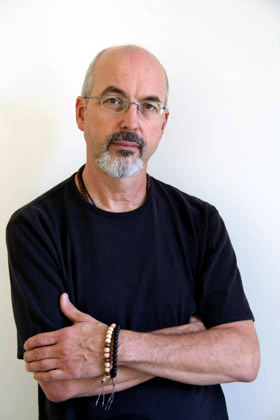
Bill Viola is one of the pioneers of Contemporary video art, most famous for his video installations such as the ones I will be looking at here. If you want to know more about him, here's a link to his website.
http://www.billviola.com/index.htm

Emergence (2002) - http://www.youtube.com/watch?v=RTPf6mHKYD0

Emergence is based on this painting by the 15th century Italian painter Masolino da Panicale. The video itself looks like a modern take on this painting, unfortunately I couldn't find the official version of the video, there was a poor recording off a TV and a slightly edited one with music, so I'm not sure what the sound is for the video, I think its a sound of a struggle underwater. The video is two woman sat near a cistern and a naked man emerges from it, spilling water onto the floor and is carried to the floor by the women. My interpretation of this video is a metaphor for birth, with one of the women possibly being the mother. I read somewhere that Bills main aim with the video was to emphasize emotional response and to provoke an emotional response from the audience.

To learn more about the video, here's a small behind the scenes making of documentary
-
http://www.youtube.com/watch?v=hx5Cu7U-Fkg


The Raft (2004)
The Raft is filmed with one shot, but seems to have three sections. The first section is a group of urban dwellers standing about, presumably waiting for a bus or a train, when suddenly the second section begins. A violent flood appears and starts to knock people over, it's chaos, there's people falling over, trying to stay upright, holding on to each other, by the time the flood finishes everyone's on the floor soaked to the bone. As an audience member i knew there was a metaphor behind this, but to be honest I don't really see what it is, perhaps it's just a demonstration of how people help each other when in need, that we put color and creed behind and just help people. Thats what I saw from it anyway.
Viola calls “The Raft” a metaphor for today’s world, but it also provides something of an antidote, countering the noisy spectacle of Hollywood disaster films with a focus on human psychology and a presentation largely stripped of particulars.
Viola says the work is “for cultivating knowledge of how to be in the world.”
Here's a small interview with Viola on The Raft - http://www.youtube.com/watch?v=BwA2TrBzWWI


Artist Two: Sam Taylor-Wood
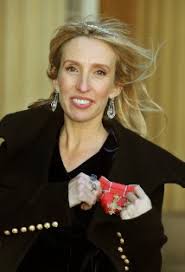
Sam Taylor wood is an English film maker, photographer and video artist. Started fine art in the 90's and won the Illy cafe' prize for most promising young artist in '97.

Still Life (2001)
Essentially this is just a video of fruit decomposing, sped up to 3 minuets, with a pen next to it. It's not pretty, but its very interesting to watch. I think what the metaphor for this one is meant to be the fruit is our body, its going to wither and die, but our work stays behind, almost immaculate, unscathed by time. Our work being represented by the pen. Unfortunatly i can't find anywhere on what she thinks of the video or what she was trying to show, but from what im reading in different articles, I'm pretty close already. Im reading the phrase "memento mori" a lot in the articles, which is a latin phrase for "remember your mortality" so i can't be too far off.

Hysteria (1997)
This is an 8 minuet video of a woman laughing angrily. At first I thought she was laughing then half way through I thought she was crying. But throughout the whole video your never too sure. I think she was trying to convey different emotions through one movement, the meaning of hysteria is excessive or uncontrollable emotion, usually fear or panic, so I'm guessing the video is more of a negative vibe. My personal opinion of Sam Taylor Wood is that she is probably one the most overrated "artists" of her time.

Monday, 24 September 2012

personal statement (Draft)


Sebastian White

The hour before a performance starts when I am preparing, I walk around the stage. This is the time when I feel the most comfortable, anxious and focused all at the same time.  I plan to enter the theatre industry and see this course as the logical next step. I have spent my time at college learning more about the industry and have taken on roles on stage and behind the scenes; I spend a lot of my spare time looking for more performance opportunities and relish the chance to work with a company to create something the audience will love. I am looking forward to the challenges that studying at the next level will bring and I feel I am ready to apply myself fully to the training ahead.

Alongside my studies I have spent the past two years working with a local theatre group called Titchfield Festival Theatre (TFT). This has been a great arena for me to experiment with what I have learnt; it has also challenged me to learn a role within a very short time scale. I have been lucky enough to be in demand with this group, and being almost 7 foot tall there are a lot of roles to which my height lends itself such as ‘The Creature’ in ‘Frankenstein’. I have also taken on roles such as; Borachio in ‘Much Ado About Nothing’, The Ghost of Christmas Yet to Come in ‘A Christmas Carol’, Les in ‘Bouncers’, Timms in ‘History Boys’ and an array of characters in an original play by Stewart Trotter for TFT called ‘Our Cousin Will’, a play based on Shakespeare’s life. After that I went on to direct my first project for the company, ‘Little Shop of Horrors’. I also played the voice of Audrey II. ‘Little Shop…’ went on to be nominated for Best Amateur Musical for the Portsmouth Guide awards. Despite having had very little directing experience, I put together what little knowledge I had and pulled together a very enjoyable and engaging show. This was a great project that made me fully appreciate how much time and dedication is needed for even the smallest of details in making a production work.

I think the first flicker of inspiration I had was when I was younger -  I used to watch bloopers from films, mainly featuring Jim Carrey, such as The Mask and Liar Liar, and thought “That looks like fun, I want to do that!”.  I would watch his films and study the way he would deliver jokes; I’d then go into school the next day trying to mimic him or re-enact a scene to get a few laughs.  The other films that inspired me were the Lord of the Rings trilogy - I was obsessed with these films for years; in my opinion they’re the closest a film can get to perfect. Watching documentary footage of its making really inspired me to want to be an actor. For a few years screen acting was all I wanted to do, but being part of a theatre and seeing crowds laugh at a line I delivered or a physical gag showed me how amazing it can be on stage. My uncle is a young filmmaker and wherever we have the time we make short films together: Sometimes I’ll write and perform, sometimes I’ll just perform. After I finished my National Diploma in Performing Arts course I went on to complete a National Diploma in Creative Media Production, so I have had a valuable experience in the two fields of performing that I enjoy.

During my college course I have performed in productions that range from large scale musicals such as "Our House", "Crazy for you" and "The Producers" to small scale plays such as Peter Brook's "The man who" and some devised plays. My real enjoyment came from exploring texts such as Harold Pinter's "The Lover" and Martin McDonagh's "The Pillowman". I appreciate the dark and realistic writing styles of Pinter and McDonagh and found these more challenging, its something I would very much like to go onto do in the future, this is why I am ready to progress onto a Higher Education course, I  am looking forward to working in a more challenging environment with people who are equally driven. I will be able to devote all the time to training and developing in preparation to enter the industry.

Wednesday, 19 September 2012

music videos

1 - Watsky & Mody- Man of Constant Sorrow ft. Dylan Saunders
http://www.youtube.com/watch?v=E6Ocqp16Ldc&list=UULJcVCVvcD802r80B9oaM3A&index=14&feature=plcp
Directed by Jackson Adams
490,050 views on youtube
Synergy: The original song was featured in the film "O brother where art thou?" (2000), the film was based on Homers Odyssey, set in the 1930's about three "jail birds" who go on an adventure with the law behind them. This music video mimics the film, and does it so well.


2 - Electric 6 - gay bar
directed by Tom Kuntz and Mike Maguire
24,074,570 views on youtube
Even though this video has nothing to do with the song, watching the video makes me think its a sly attack on the foundations of America, perhaps saying that the leaders of "this great nation" are actually gay warmongers.


3 - Cosmo jarvis - gay pirates
Directed by Cosmo jarvis
1,216,446 views on youtube
In an interview with Cosmo Jarvis, he said that he wanted to do a song about equality but something thats not so cliché, he said he was thinking about a statistic, 1 in 10 men are gay, so 1 in 10 men must have been gay back in the day, therefore there must have been gay pirates. This is a love song, not a parody.


4 - Fatboy slim - Weapon of choice
Directed by Spike Jonze
too many videos of it to get a deffinate view count, but the video views range from 700,000 to 2,000,000
Before Walken  was an actor he was trained as a musical theatre dancer, and as far as i know, he choreographed the dance himself. The "Weapon of Choice" video won six MTV awards in 2001. Walken was awarded one of MTV's "Moonmen" for Best Choreography. The clip was also ranked number one in a list of the top 100 videos of all time by VH1 in April 2002 that was compiled from a music industry survey.


5 - Gorillaz - Feel good inc. Ft. De la soul
http://www.youtube.com/watch?v=pw8PpYBiDsc
9,637,757 views on youtube
Directed by Jamie Hewlett and Pete Candeland
This music video is supposed to be an escapist metaphor, if you imagine the the feel good inc. tower as a prisson of fame, greed and debauchery that the band have created around themselves. When the lead vocalist (2D. Thats his name) is walking around the tower with the megaphone, he's meant to be waking up the rest of the band, make them realise where they are and what they have become. The windmill is a place he would dream of when he was younger, his happy place.


6 - Red hot chili peppers - By the way
21,257,871 youtube views
Directed by Jonathan Dayton and Valerie Faris
This video has nothing to do with the song or the lyrics, theres nostory behind it, i think they just thought it was funny. It's a story all on its own.
At the begining of the video Anthony is holding a book about a band called "the germs" a band that was discovered and produced by "mullen" same person who found and produced the chilis.


7 - David Bowie and Mick Jagger - Dancing in the streets
1,259,485 youtube views
Directed by David Mallet.
I picked this last one, because its awful. Alot of sexual tension between these guys. Im not quite sure what the director was trying to do with this, or even why bowie and jagger thought it was a good idea to continue with it. Shortly after this video came out there were rumours that the two front men slept together. If you watch this you might see why the rumour appeared.

music video class notes

  • choose a band/artist, preferably one thats unsigned.
  • book the artist a few weeks before to give them notice, if they're doing a cover, get hold of the copyright.
  • the song can be no shorter than 2 minutes 30 and no longer than 5 minutes.
  • start late december.
  • Keep a record of communication i.e emails, phonecalls.

Task 1
  • look at 6-8 music videos
  • synergy - when the video is so famous that it can referenced in other videos, films, tv. OR for instance Aerosmith - i dont wanna miss a thing, the video has clips from armageddon, the film and the music work together, synergy.
  • Availability -copies, where to find it, enhanced cd, exclusivly where to see it first
  • reaction - fan feedback, critics,compilation shows (top 100 type thing)

Tuesday, 17 July 2012

Evaluation of press pack

Strengths, Weaknesses, Opportunities, Threats. Evaluation time already? Lets crack on.

So my strengths on this project were probably, well I can't think of any strengths, I don't see how you can have strengths at finding interviews and posters but I can tell you about my weaknesses. My main one being straight up lazy, I just don't like work, which I know isn't good but I'm being honest. Now because I'm lazy and don't like work, this little concoction made me leave everything to the last minuet which in turn gave me less time to try out different ideas and I had to do things that would probably be either quick or easy. Believe me I've learnt my lesson and I will not be doing this again. The fact that I write how I talk is probably a bad thing too, especially in an evaluation. Being formal is just so formal. I'm also not very good with programs like Photoshop, which made it hard to make a poster and DVD sleeve, there's just too many numbers and I get confused.

But I suppose a strength would be that I'm quite imaginative so I can always have ideas for DVD sleeve, poster, trailers and what not. The interview was fun to do, I liked being famous for a moment. Even if it was me interviewing myself.

Thanks to this project I got a chance to read through some interviews I was interested in, all of them I posted on blogger, which I might not have got to otherwise. That was a good opportunity.

I was threatened by the amount of work I had to do. The worst of the threats was the programs i was trying to use that kept collapsing on me. Every time I tried to use premier pro, it just said no and turned off, when I tried to download the sleeve to edit mine onto, it wouldn't work. I tried downloading it from different sources but that didn't work either. Just technological things like that got in the way, it was frustrating but I just had to change my game plan in the end, which was why I did a poster instead of sleeve. Also because the poster was already made a while ago and hidden away in some old files. Nothing to hard to handle.

Interview with Sebastian White.

We're all familiar with the White brothers films. The Contingency plan, Cold light. The brothers are famous for writing films together with Tom White directing and Seb acting somewhere in them, but this summer will show the dawn of Seb's solo film career. Sebastian white has written, directed and starred in his upcoming highly anticipated action thriller "Distortion", we caught up with him on set for a quick interview.

Well this film has certainly got a lot of attention, the internet seems to be having a frenzy over it, how do you feel about all the attention, do you feel like you need meet peoples high expectations?
(Laughs) Yeah it's madness isn't it? I don't often go on the internet, but it's hard to avoid it sometimes, it does seems like its everywhere at the minute. Um, yeah hopefully I'm not going to disappoint anyone with my film, its quite different from Contingency.

Would you say its more like cold light? They were a little different, you were very different in both.
Well I had different characters, they had to be different! (Laughs) I would say its more like light cold light but with less action. People are expecting an action film, I suppose that was my fault with the trailer. Too be honest if I had to compare it to a film I would say its more like Seven (1995) It is a psychological thriller with guns in it, I just don't want to people to walk out the cinema thinking "well that was crap" because they were expecting an action film.

Your'e brothers got a new film in the making too hasn't he? Has your solo career made things difficult between you both? I mean your known as partners in the industry.
Not at all, I actually wrote this film years before we were famous and he's helped me all along the way. I remember we were having dinner at his place when he said to me "You know what, you should totally make that film of yours now", so if my career dies after this you can blame him (laughs)

Even with you using his most favoured actor?
Are you talking about Sam? Yeah Sam (Goodall), Tom and myself have been friends since college, I don't think he'll care, Sam definitely doesn't care, it's two pay checks right?

Can you tell us anything about Tom White's film?
No can do, sorry mate, if I did, I swear to god he would bust through that wall in a bus and kidnap us both.

So it's a film set in America, but you've chosen to have the premier in London, what made this decision?
Well it's my homeland isn't it? And it's Sam's, I just thought it would be nice to have it shown at home.

Well it's been a pleasure, I best let you get on with what you're doing.
I'm not doing much, but yeah thanks, it's been fun.

Distortion is out 17th of August and will be reviewed in the next issue. Interview by Dan Jolin

Friday, 13 July 2012

Press pack proposal/response


For Advertising my thriller I intend to create a DVD cover sleeve and an imaginary interview in a magazine with myself. Dreams do come true. But before I do either of these things I will need to do a little bit of research, so I'm off to look at a few magazine websites and DVD covers, and I'll report what I find momentarily.

Here is an Interview with Christian Bale on The Dark Knight rises. http://www.empireonline.com/interviews/interview.asp?IID=1529

And here's another from Gary Oldman from the same film. He seems like a real nice guy. http://www.empireonline.com/interviews/interview.asp?IID=1527

These were both from Empire, this next one is from Total Film
This is Andrew Garfield on The Amazing Spider-Man

Here's a couple pictures of magazine interviews from TotalFilm and Empire

Here's an Image from a TotalFilm magazine Interview With Richard E Grant (Left)
And an Empire magazine's Interview with Christian Bale (Below)
Now after some intense reading of interviews, I'm supposed to show you some DVD covers I've found. Well here you go, some inspiration to my work I suppose.


Inception DVD sleeve. I think it works well, the cover has all the main characters holding guns and looking cool with a city bending over them, then on the back it has a series of screen shots from the film neatly placed around the blurb.


Iron man DVD sleeve. Personally I think this one works better than the Inception Cover, the front cover is cleverly put together with all the characters standing next to the iron man suit with a little explosion and a couple of jets flying after iron man. A bit of action with a few dramatic looks. The back of the sleeve is a dramatic pose from Robert Downey Jr. with the half finished suit behind him, next to him is the blurb and underneath them both are roughly six pictures all lined up. Its good.

The Dark Knight. This is good, better than inception, but not as well laid out as iron man. Dramatic pose from batman in front a building with a burning bat symbol on it, which is cool, but that's one thing with films that annoy me, when they show things that don't happen. so I don't know, its kind of false advertising, what if you bought it looking forward to a scene where the joker blows a bat symbol out of a building to get the bats attention? Anyway, the backs good, picture of batman holding a batarang next to the blurb, underneath that there's 3 or 4 screen shots from film, under that a picture of the joker looking menacing, it all works fabulously.

Looking at all these have got me pumped to make my own, so I'm off to do that, see you in a bit.

*10 minuets later

OK so the software I'm meant to be using isn't working for me, so now instead of making a DVD sleeve I'm going to make a poster. Here's some posters to show the research I did.


This is the teaser poster for The Dark Knight Rises, a very clever poster not showing much, but still telling you its about Batman, with the buildings falling apart it gives you the sense that there's going to be a lot of action scenes.
This is the teaser poster for Quantum of solace, this poster actually Says 007, that makes it obvious its a James Bond film, Bond famously uses a pistol, so showing his shadow holding a rifle could mean that there's going to be a lot more action than there usually is in a bond film.

Wednesday, 11 July 2012

commissioning process

There are six stages in the commissioning process, these stages are as followed.

Writer - This is the person who, funnily enough, writes the original idea. It is the writers job to think of an idea,write it down and turn it into a script or screen play.

Writers agent - It is up to these guys to to get the writer work. They will read the script and go out to look for publishers or producers who they think would be interested in buying their work. They will get a small percentage of what ever money the writer makes

Script editor - The script editor is usually a member of the production team in Television series, such as comedies or dramas, to make sure its ready to be produced. They mainly just make sure there's no continuity errors, suggest improvements or cuts to make sure it adheres to the correct running time.

Commissioning editor - This is is usually a board of people who you will have to pitch your idea to, if they like it then it gets commissioned and made into a program or film or what ever it is your trying to do.

Producer - The producer mainly deals with the financial side to all this. Before a film is financed by a studio the producer will often put their own money into the project, and insure it stays on the production path. They make sure the film sells, they have a direct input in advertising the film during its creation.

Director - The Directors job is to translate the script into a vision. They are more or less the leader in the film/television filming and often editing process. They direct the actors and film crew in what to do on set.

Friday, 6 July 2012

Equipment you'll need in print.

PAPER - It makes sense to practise printing on paper first, so if you mess up your not wasting a shirt, and you can see if you need to make amendmants to your design. For the best results on paper you should put a penny or some cardboard  between your screen and the paper so only the design is printed.

APRON/OLD SHIRT - Now unless your Mr.Miyagi, I suggest you get yourself either an apron or a shirt you dont care about, because it can get messy. Not to mention the paint you should be using, will stain.

T-SHIRT - This will become the proud flag of your art. Although anything can be used to print on, the printable objects are called substrates.

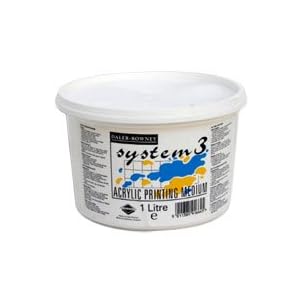
Dr Acrylic Printing Medium 1Lt
SCREEN PRINTING MEDIUM - Its best to use different paints for different surfaces, for instance you should use water or oil based inc for paper, fabric inc for fabric. The all round savior would be acrylic, Its what we used for our shirts and paper so I assume its an all rounder.

SQUEEGEE - It is whats used to drag the ink across the screen evenly. You will need a squeegee to also administer the emulsion to the screen after washing it of coarse. 

 
SCREEN - You apply the emulsion to the screen which seeps into the mesh. On the other side of the screen you place the image which you want burned and used. The mesh on the screen are like pixels, the smaller the holes the clearer and less jagged your picture will be.

PALLET KNIFE - Used for mixing acrillic paints and to scoop out emulsion to then place onto a scoop. It has a flexible, durable steel blade which makes it have more movement and therefore easier to use on thick liquids.
PHOTOSENSITIVE EMULSION - The reason we use photosensitive emulsion is because its so sensitive to light, when its exposed to light it hardens, so if we coat the screen with the emulsion it seeps through the screen filling the tiny holes, on the other side of the mesh we put our image, so when the light hits the emulsion it hardens with the shape of your image burned into it. We then wash off the rest of the emulsion to have a screen with your image ready.


LIGHTBOX -  When the screen is covered in the emulsion, the UV rays harden it. If you put any black screen infront of any part of the emulsion, it will not set what you've covered up and therefor will be able to get washed off with water.

Regualtory issue notes

Censorship is the suppression of any harmfull of offensive material in t.v or film such as swearing, violence and pornographic material. These things usualy become censored because the BBFC or the company airing the program deem it to be offensive or possibly harmfull to a younger audience.

The freedom of information act is the law which alows us to request for any informtion from any government body or authority. In the media this has been used many times for journalists to get some pretty good scoops
such as Prince charles writing to ministers and "meddling in politics" http://www.guardian.co.uk/uk/2009/dec/16/prince-charles-letters-to-ministers

Consumer choice is basically us (the consumers) controlling the market without realising, so if the playstation 3 and xbox 360 came out at the same time, and more of us bought the 360 advertising of that product would go up a lot more, which i believe did actually happen. Another example of this is the turn from analog to digital t.v, after a certain amount of people made the change it became a mandatory thing to do, after 24th october 2012 all analog channels will be shut down, now i can see why they would do this but at the same time i think people should be able to chose whether or not they want digital, although i dont know of anyone who doesnt have/want digital, choice should always be an option.

Taste and Decency in the media is basically what it says. What some people may find funny such as the banned condom commercial where the child is screaming about sweets and then it says "should have warn a condom" other people may find offensive, think it was in bad taste and indecent. Personally I don't think that advert was that bad and banning it was a little over the top, but obvioulsy enough people complained it had to go.

Tuesday, 3 July 2012

Unit 3 purposes of research

As far as i can tell there are six main types of research people can do, they are as followed: Exploratory, Descriptive, Speculative, Explanatory, Predictive and Evaluative. I will explain what each means now.

Exploratory research is when little is known about the topic or previous theorys have been proven wrong. Exploratory research is used to clarify problems, gather data and help researchers form their initial hypothesis on the subject that they are researching.

Descriptive research is the research of things that already exist, studying the behaviour, frequencies, characteristics or gathering statistics on the subject, posing questions which have not yet been answered.

Speculative research is described as when a researcher will pose an idea and others will argue its either not original or even sometimes not worth doing, their research might be kept until it can be proved useful.

Explanatory research is finding the cause and effect, researchers who use this method or type are trying to answer the question "why", for example if there was a study saying divorce was higher in christian couples than jewish couples (Descriptive research) Explanatory researchers would find out why that was the case.

Predictive research is the research of finding corresponding results in other tests that link together. A question a predictive researcher might ask is "do the results of an IQ test tell you how well that person might do in an exam?"

Evaluative research is used to measure, judge, evaluate results from other means of research. Or in other cases evaluating the need for other means of research.

Monday, 2 July 2012

Knife crime research - unit 24

1) The youngest person to be arrested for carrying a knife is 12
http://www.direct.gov.uk/en/CRIMEJUSTICEANDTHELAW/Typesofcrime/DG_181675- This was the site i found this on as the Direct Gov making it straight from the goverment so it will be true and based on original facts

2) in 2007 27 People were stabbed to death in london alone
http://www.sayno2knives.co.uk/about.html - This site was the most helpful to me as it showed all the important facts that were useful to me  
 
3) The first Fatal Stabing of 2008 came just hours after the new year.
http://www.sayno2knives.co.uk/about.html This site was very helpful to me as it was a site based purely on fact's and figures based around Knife Crime and then helped me to have quick one line sentence's  

4) On May bank holiday 2006 (27th-29th May) the police recorded 50 Knife attacks
http://www.sayno2knives.co.uk/about.html

5) From July 2007 - October 2007 there were 5,500 serious knife crimes

http://safe.met.police.uk/knife_crime_and_gun_crime/get_the_facts.html - I used this site for a few facts as it was comng stright from the police making it more reliable and trust worthy.

 6) 28% of children in schools and 57% that were excluded said they have carried a knife in the last year

http://safe.met.police.uk/knife_crime_and_gun_crime/get_the_facts.html - Again i used this site as it seemed the best for reliable information. It was very informative and helped me get inportant information

7) 62% of children who were excluded were a victim carried a kife compared with the 51% who didnt.

 http://www.scotsman.com/news/knife-crime-sharp-facts-1-1493677 i didn't find this site that helpful as it was a big chunk of information which was hard to read. The site was a scottish site s o knife crime proberaly wasn't as common as it would be in north London
8)A survey was done with 4,715 pupils in school and 687 excluded pupils aged 11-16 and were asked "If they had carried or used a weapon -
http://www.thebigquestion.co.uk/teachers-resource/knife-crime-facts-stats/ - This was the sit i used for this and a majority of my research i found it helpful as it was based purely for the sake of knife crime being taught to students by teacher's.

9)15% of children in schools felt "a bit" or "very unsafe" according to the Youth Justice Board
http://www.knifecrimes.org/worried-about.html -I found this site helpful as it was aimed at young people to help then deal/ avoid knife crime

10) For the facts below on illegal knives that are not allowed to be carried in public.
http://www.direct.gov.uk/en/CRIMEJUSTICEANDTHELAW/Typesofcrime/DG_181675 - This site was good to me as it was from the goverment and gave me a full list of knives and a numerous ammount of facts
  • flick knives - knives where the blade is hidden inside the handle and shoots out when a button is pressed; these are also called 'switchblades' or 'automatic knivesbutterfly knives
  • disguised knives - where the blade is hidden inside something like a belt buckle or fake mobile phone
  • gravity knives
  • sword-sticks
  • samurai swords
  • hand-claws
  • foot-claws
  • belt-buckle knives
  • push daggers
  • kubotan (cylindrical container, holding spikes)
  • shuriken (also known as 'death stars' or 'throwing stars')
  • kusari-gama (sickle attached to a rope, cord or wire)
  • kyoketsu-shoge (hook-knife attached to a rope, cord or wire)
  • kusari (weight attached to a rope, cord or wire)

Unit 3 Research techniques - Quantitative and Qualitative

Qualitative research is information that is gathered from interviews, sending out questionaires (if its not a questionaire with simple yes or no questions, as long as it has the answer then an oppinion), surveys ect.


Quantitative research is infomation that is presented as facts, statistics, percentages ect. Depending on what the source is, this is the more reliable of the two.

The 2004 american documentary "Supersize me" is a good example of both research techniques, at the begining of the film Morgan Spurlock talking with his personal trainer, he states that Morgan is above average phsyical shape and is healthy. He is then seen by three doctors a cardiologist a gastroenterologist and a general practitioner, as well as a nutritionist. All of the health profesionals predict that the diet will have an unwelcome effect on his body, but none of them expect anything too drastic one of them even saying the human body is very adaptable. All this research is done before hand and does not involve number this involves talking to the specialist and seeing what they think will happen. Therefore the beggining is Qualitative. Though as the documentary goes on more figures and statistics are shown giving a good mixture of Quantitative and Qualitative research.

Friday, 29 June 2012

Unit 2 - Gloria swanson - initial research

Born: Gloria May Josephine Svensson
in Chicago, Illinois, USA


Died: April 4, 1983 (age 84) in New York City, New York, USA

first appearance in film was when she was 16, played the daughter of Lillian drew in "The Fable of Elvira and Farina and the Meal Ticket"

video installation ideas

IDEA 1
My initial idea is to take the poem "All the worlds a stage" by William Shakespeare and put a video to each segment of the poem. As the poem is about  the seven stages of life, i think it could work being played on a loop. The opening will be a man on a stage performing the poem, then videos to coincide with the poem to tell a story together.

IDEA 2
Film a candle burning from new, while it burns down show the earth and nature flourishing then mankind coming in and taking over, building factory's, having wars, driving, cutting down forests, animals dying, buildings on fire, buildings being demolished. During all of this it cuts back and forth from the candle slowly burning away until it finally goes out.

IDEA 3
film myself talking to the camera flipping a coin, asking the camera to call it. Have several outcomes and put it on loop. Have the film projected behind a desk so it looks like i'm sat there, when people come in it'll seem like i'm asking them.

market research

Audience Data: 
Audience data is a measure of the demographic profiles and household data of the national audience for a television network at certain intervals when something is aired. Audience data could be used as feedback on whether an advertiser is reaching out to the intended audience. Demographic numbers measure the average number of individuals in the selected demographic per household.Impressions measures the number of active televisions that were tuned in when your ad aired. Demographic numbers measure the average number of individuals in the selected demographic per household. (For instance, two people between the ages of 45 and 49.) The numbers for households (such as household income) and interests (such as dogs or golf) indicate one or more persons with those traits in the viewing household, but don't attempt to define the exact number of viewers with those traits in each household.

Audience Profiling:
Audience profiling is finding out the profile of your audience before hand so that you can put across your message to the right people in the most effective way to produce the best result. It might include details like age, sex, educational qualification, work experience, financial background, field of work, interests, mood, orientation, bias, food habits, religious background, physique, health condition etc.


Consumer Behavior:
Consumer behaviour is the study of when, why, how, and where people do or do not buy product. It blends elements from psychology and economics. It attempts to understand the buyer decision making process, both individually and in groups. It assists market researches in learning the trends of the market and what the best ways are to get positive reactions from the consumer the idea is aimed at. 

Advertising Placement:
An advertising technique used by companies to subtly promote their products through a non-traditional advertising technique, usually through appearances in film, television, or other media. Product placements are often initiated through an agreement between a product manufacturer and the media company in which the media company receives economic benefit. A company will often pay a fee to have their product used, displayed, or significantly featured in a movie or show. For example, Coca-Cola could pay a given fee to have the title character drinking a Coke, instead of a Pepsi beverage, or Toyota might pay to have one of the characters drive their newest automobile. Through product placement, companies hope that moviegoers will take note of the products used by the characters, and therefore think more strongly about using the products themselves. Some people consider product placement to be deceptive and unethical.

Product Reach: 
In consumer marketing 'Product Reach' has to do with the Distribution of the product. One of the four 'Ps' of Marketing Mix. It depicts on the availability of your product to the target market.
The more effective the distribution the more is your product reach to the customers at different stores and places and town and cities.

Competitor Analysis:
The process of identifying the performance and marketing strategy of competitive brands or products in the marketplace. In order to plan an effective marketing strategy, marketers need to know about the competitive environment and to find out all they can about competitors' products, prices, communication channels quality, and service so as to determine areas of competitive advantage and disadvantage.

Monday, 28 May 2012

Warner Brothers.

Harry, Albert, Sam and Jack Warner, these are the Warner brothers. They started of showing films from a projector they bought in small mining towns, thenwhen they had gathered enough money between them they bought a cinema in 1903. In 1904 they bought a small shipping company to distribute films and then in 1914 they had become producers. Finally in 1918 they opened warner brothers studios in Hollywood. In 1923 April 4th, Harry took a loan from Motley Flint, to turn the studio into Warner Brothers Pictures, Incorporated. In 1925 they added sound to the pictures, even though Harry opposed it, famousely saying "Who the hell wants to hear actors talk?"
1930 saw the birth of warner cartoons and their most iconic cartoon of all, Looney toons. But it wasn't until 1936 that Tex Avery (a director for Warner) directed a chain of short animations that had a central character and that character was Porky Pig, the first cartoon star was born. A year later Daffy Duck was created and in 1940 one of the most iconic cartoon stars was created, Bugs Bunny.
In 1955 the studio merged with television to create the Warner bros. television unit ran by William T. Orr, Jacks son in law. In 58 the studio launched Warner bros. Records, which was mainly just recordings of actors from favourate warner tv shows singing, weather they could sing or not. In 1963 Jack Warner agreed to a deal with Frank Sinatra to merge their record companys together with Reprise records becoming a subsidary company to Warner. In 66 Jack sold the control of the company to Elliot and Kennith Hyman for $32 million. The company was renamed Warner Bros - Seven Arts and became an addition to the Canadian comapany the Hymans owned, seven arts. Jack became the vice president of the company and stuck in his old ways not able to go with the times annoyed the Hymans who eventually in 1969 accepted a cash and stock offer of $64 million from Kinney national company who also owned a talent agency Ashley-Famous. Ted ashley who owned the talent company pushed Steve Ross, the head of KNC, to buy Warner bros. Ted Ashley became the head of warner and changed the back to Warners Bros. Inc. Jack did not agree with the sale and so decided to retire. The new management believed that it was famous actors who could help the company and so made deal with big stars at the time such as Clint Eastwood, Barbara Streisand, Robert Redford and Paul Newman to appear in their films, this helped carry the studio through the 70's and 80's. Warner Bros. also made ridiculous money from making films out of Superman and Batman, two comic book characters owned by Warners subsidery company DC Comics. During the 70's Kinney became Warner communication and branched out into other buissnesess such as video games and bought out Atari, which is now a subsidary of Warner. In 1989 Warner merged with Time to become what its known as today, Time-Warner.

Warner  Brother's is currently a subsidiary of Time-Warner so receive no direct funding from private investment or sales figures. Time Warner allocate a budget as the parent company to all of their subsidiary companies.

In 1992 Warner brothers created "Warner bros. Technical Operations" which was a studio-wide development that allowed warner brothers to develop technologie that could help them grow as an organisation. WBTO was the driving force behind the creation of the DVD and created the majority of that kind of technology. WBTO also do film restoration for classics such as "Gone with the wind" and "The wizard of Oz" wich is a good opportunity for re-release and extra sales.

Monday, 21 May 2012

How to burn a screen on a light box.

Once your screen has dried off and your ready to print you will need to use a light box. This is a light with a high uv concentration that will burn the image. The light box has a vacuum that will suck down a thin silicone skin on to the screen in order to hold it in place. You must be very careful when shutting off the light box that you have turned the vacuum off otherwise there is a risk of the glass shattering.
To begin with when using the light box you have to set the screen in position on top of the glass and lower the the lid with the screen in place. Once the lid is lowered and locked in place switch on the vacuum and switch the UV light on and away you go.

How to effectively coat a screen.

Initially you have to have a screen that has been cleaned to remove all residue from a previous print, you also have to prepare the photo sensitive emulsion. You then position the scooper at an angle against the deep set side of the screen and pour the emulsion in to the troth at the rear of the scooper. You then have to angle the scooper slightly higher so the emulsion pours on to the upper side of the scooper, then gradually but at a consistent speed raise the scooper up the screen maintaining some pressure against the screen to ensure limited drag marks. Once you reach the top of the screen you should lower the angle of the scooper so the excess emulsion drains back into the troth of the scooper.

Thursday, 17 May 2012

Media job roles

Film Director -
The Director is the driving creative force in a film's production, and acts as the crucial link between the production, technical and creative teams. Directors are responsible for creatively translating the film's written script into actual images and sounds on the screen - he or she must visualise and define the style and structure of the film, then act as both a storyteller and team leader to bring this vision to reality. A Directors' main duties include casting, script editing, shot composition, shot selection and editing. While the practical aspects of filmmaking, such as finance and marketing, are left to the Producer, Directors must also always be aware of the constraints of the film's budget and schedule. In some cases, Directors assume multiple roles such as Director/Producer or Director/Writer. Being a Director requires great creative vision, dedication and commitment. Directors are ultimately responsible for a film's artistic and commercial success or failure.

Responsibilities
Directors may write the film's script or commission it to be written; or they may be hired after an early draft of the script is complete. Directors must then develop a vision for the finished film, and define a practical route for achieving it. During pre-production, Directors make crucial decisions, such as selecting the right cast, crew and locations for the film. They then direct rehearsals, and the performances of the actors once the film is in production. Directors also manage the technical aspects of filming, including the camera, sound, lighting, design and special effects departments.

During post- production, Directors work closely with Editors through the many technical processes of editing, to reach the final version of the film. At all stages, Directors are responsible for motivating the team to produce the best possible results. Directors must also appreciate the needs and expectations of the film's financiers.

Skills
Directors must have exceptional artistic vision and creative skills to develop an engaging and original film.  Unerring commitment and a deep passion for filmmaking are essential, along with the ability to act as a strong and confident leader. Directors must constantly make decisions, but must also be able to delegate, and to collaborate with others. Excellent communication and interpersonal skills are vital to get the best from the filmmaking team. Directors must inspire and motivate the team to produce the film they have envisioned. They need an extensive understanding of the entire filmmaking process, from both technical and creative points of view. A capacity for long hours of intensive work, attention to detail, and the ability to remain calm and think clearly under great pressure, are key skills for this role. Directors also need great self-belief and the determination to succeed.


Qualifications/ExperienceWhile there are numerous training courses and reference books on directing, formal qualifications are not necessary to become a Director.  Studying the art and craft of directing is important, but the role can only really be mastered through in-depth practical experience.  Writing a screenplay, directing one's own short film or an amateur play, are all good starting places.  Extensive industry experience is also crucial to this role; up-to-date knowledge of filmmaking techniques and equipment is vital, as is learning how to work with actors to create a performance. 
As many Directors work their way up over many years from entry level positions, getting work experience as a Runner on a film set or in a production office is an ideal starting point.  Observing successful Directors at work, whilst immersing oneself in the practical process of filmmaking, are vital first steps on this fiercely competitive and highly challenging career path.


Actor -
Actors are the embodiment of any film production - theirs is the public face, which represents many others' work and efforts. It is rare for the public to see the Scriptwriter, the Producer, or the Director of a film - their perception is based on what is portrayed by the Actors on screen: they present a visual interpretation of the script. They bring flesh and blood, to the character.
For some roles, they must carry out extensive research, for others their character is moulded and developed during rehearsals. They work with the Director to create believable, natural characters expressing the appropriate emotions, based on the Scriptwriter's words, but built upon in order to convince the audience of their veracity.
On films, they must be able to learn their lines quickly, and to retain their meaning and inflection, while sometimes repeating the same scene many times over, for re-takes, and while scenes are shot from different angles. They should also know their fellow Actors' lines, so that they can respond to them accurately and appropriately.
They must be able to contribute ideas and suggestions to improve their own performance, in a creative and collaborative way, whilst also being able to take direction, notes and constructive criticism from members of the Directing team. They need to remember their exact positions and movements at any given time during the performance, to assist with continuity.
They must also be able to continually hit their marks on set, without looking down to locate them. Actors must be infinitely adaptable, as they may find themselves portraying many different characters over a short period of time. They must be aware that others contribute to their characterisation, e.g., those working in the Make Up, Costume, and Design teams, and that they may be serviced by a host of others in terms of transport, catering, etc., but that the ultimate responsibility lies with the Actors themselves.
As casting a well known Actor may provide the main marketing point of a feature film, he or she bears a great deal of the responsibility for its box office success, or failure. Actors also have a responsibility to their audience, to ensure that they deliver consistent performances, to the best of their abilities, irrespective of their personal circumstances.

Typical career routes
Actors come from a variety of backgrounds, and it is difficult to pinpoint any specific career route. Some Actors start their careers in theatre, after leaving drama school pursuing auditions or often working initially in Stage Management, and progressing to Acting roles on stage. Others may successfully audition for TV commercials, Radio or TV drama series, or Film roles, and gain a reputation by exposure on these media. However, there are no guarantees of work, or work progression, for Actors.

Screenwriter
(aka Writer or Scriptwriter)

Screenwriters are responsible for researching the story, developing the narrative, writing the screenplay, and delivering it, in the required format, to Development Executives. Screenwriters therefore have great influence over the creative direction and emotional impact of the screenplay and, arguably, of the finished film. They are almost always freelancers who either pitch original ideas to Producers in the hope that they will be optioned or sold, or who are commissioned by a Producer to create a screenplay from a concept, true story, existing screenwork or literary work, such as a novel, poem, play, comic book or short story. Screenwriting is emotionally and intellectually demanding, and requires an in-depth understanding of visual storytelling, and of the different ways that films affect audiences. Many more screenplays are commissioned than films are made, and only a very few top UK Screenwriters make enough money to sustain themselves entirely through writing screenplays. Screenwriters write in teams, and an additional Screenwriter may be recruited onto a project by the Producer to improve one or more aspects of the narrative. This Screenwriter may share a screenwriting credit with the original Screenwriter, or otherwise be credited for Additional Dialogue, or as a Story Consultant. In some cases the original Screenwriter may be replaced entirely by another Screenwriter, in which case the original Screenwriter may then receive a "Screenstory by..." credit on the finished film.

Responsibilities
Screenwriters provide a blueprint onto which the Producer, Director, Production Designer, Composer and Editor, cast and crew can graft their creative efforts. Screenwriters must be able to write a screenplay in which the reader can 'see' the film unfold cinematically in their imagination. The screenplay must therefore not only feature fascinating characters, an exciting plot, and a great premise for a marketable film, but it must also conform to the logical principles of dramatic construction, as well as to industry expectations regarding format and style. Screenwriters must produce highly creative writing, to strict deadlines, and they need to work constructively with other members of the script development team to create a product that is likely to be financed and made.

Skills
Screenwriters must have an in-depth understanding of story, plot and narrative, and must also demonstrate the creative imagination required to project their vision on to the page, and to breathe life and individuality into their characters and the life-choices they make. They need to write visually, using sound and dialogue to support the action in order to create a credible and internally consistent story world. They need to understand how a screenwork manipulates and entertains its audience, and must be able to structure their work within a specific tone and genre to satisfy and transcend audience expectations. Screenwriters should be creative, dedicated, well organised, and capable of working as part of a team, to strict deadlines. They must be able to handle frequent rejection with equanimity. A large proportion of produced screen-works are Producer (not Screenwriter)-driven, and sometimes even superb screenplays do not get made. However, as writing a great screenplay can help Screenwriters to secure work on other projects, they must be both ambitious and realistic about their talents, the film industry, and their career prospects.

Qualifications/Experience
While no formal training is required to be a Screenwriter, Producers expect screenplays to be submitted in standard Mastershot format, and are unlikely to read submissions unless they are presented in this way. Prospective Screenwriters can attend one of a number of industry respected Screenwriting courses. More experienced Screenwriters may also wish to consider taking an MA in Screenwriting. Screenwriters must write a number of original short and feature screenplays 'on spec' (self-financed) in order to attract the attention of Producers and Agents. In addition to First Draft screenplays (a screenplay is always a First Draft screenplay until it is sold), Screenwriters should also prepare pitches, synopses and outlines, which may be required by Producers before they are prepared to read the screenplay itself.